
Implementing Integrated Land Use Planning: A step-by-step guide for rural areas
INTRODUCTORY GUIDE: CHAPTER 1. NATURE AND SCOPE
1.6. Emerging issues in land use planning
1.6.3. Peri-urban and urban agriculture
Urban and peri-urban agriculture (UPA) can be broadly defined as the cultivation of plants and raising of animals within and around cities. A more comprehensive definition describes UPA as agricultural practices that produce food and other outputs, encompassing transformation, distribution, marketing, and recycling processes. These activities take place on land and other spaces within urban and surrounding regions, involving diverse stakeholders, institutions, and policies. UPA largely relies on regenerating local resources to meet the evolving needs of urban populations while serving multiple functions (FAO et al., 2022).
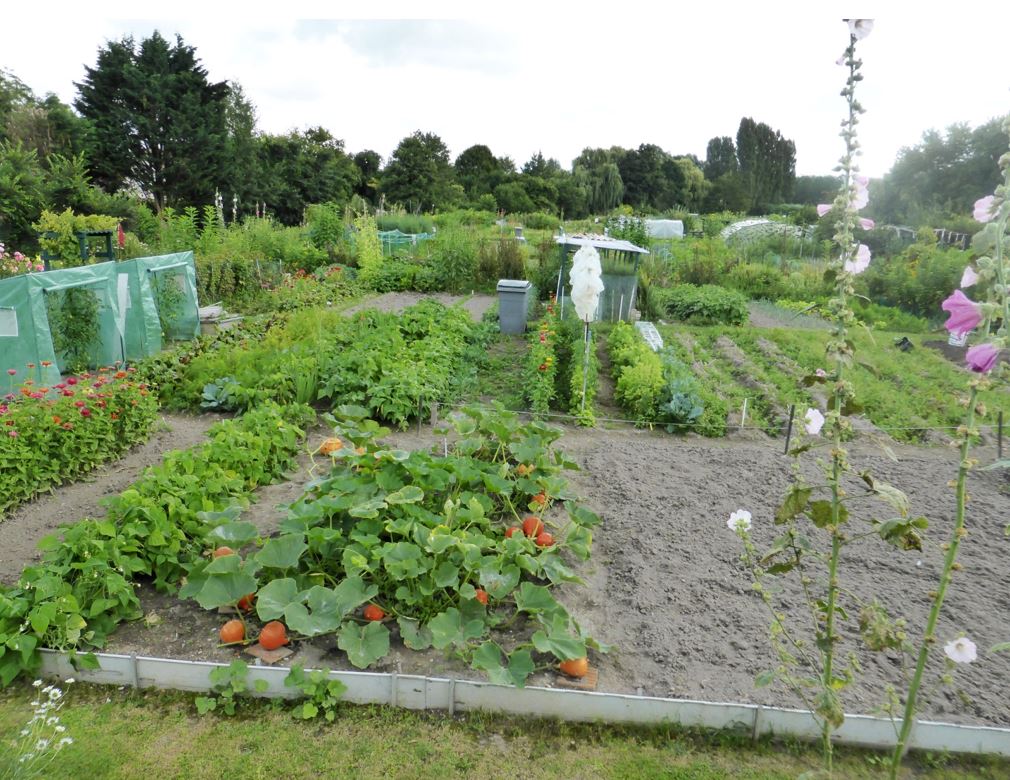
Urban and peri-urban agriculture differ in scale and purpose. Urban agriculture typically occurs in small spaces, such as vacant plots, gardens, balconies, and containers, and involves growing crops or raising small livestock primarily for household consumption or sale in neighborhood markets (Fig. 10). Peri-urban agriculture, located on the outskirts of cities, is more likely to involve intensive semi-commercial or fully commercial farming, including vegetable cultivation, poultry farming, and dairy production.
Currently, 56% of the global population—approximately 4.4 billion people—live in cities. This number is expected to more than double by 2050, with nearly 70% of the world’s population residing in urban areas [5]. As cities expand, UPA is expected to play an increasingly vital role in food security, particularly in providing fresh and perishable produce to urban populations. Due to its proximity to markets, UPA presents economic opportunities by generating income and employment while supplying vegetables, meat, and dairy products to a growing consumer base.
Beyond food production, UPA has multiple benefits. It reduces transportation and cooling costs, mitigates climate change effects, helps green and cool cities, and contributes to a circular economy by recycling urban wastewater and organic waste. However, despite these advantages, UPA faces several challenges that threaten its viability:
• Urban sprawl and land competition: Rapid city expansion leads to higher land prices, agricultural land fragmentation, and conflicts over land use, threatening the natural and social resource base for food production.
• Uncertain land tenure: Many urban and peri-urban farmers, particularly low-income individuals and women, face legal uncertainties due to conflicts between statutory and customary land rights.
• Limited investment and market saturation: Many urban farmers lack sufficient capital to start sustainable businesses and often enter low-cost industries, such as poultry farming, which quickly become oversaturated and unprofitable (RUAF, 2010).
• Water scarcity and health risks: Competition for water is intensifying, and many urban farmers rely on untreated wastewater for irrigation. Additionally, improper use of fertilizers and pesticides poses health hazards (Lagerkvist, 2014).
• Environmental concerns: The presence of livestock in densely populated areas contributes to soil and water pollution, unpleasant odors, noise, and an increased risk of disease outbreaks.
Due to these challenges, urban planners often overlook the role of UPA in city development, limiting its access to land and resources. Policies to support urban agriculture, such as zoning laws, financial incentives, and technological innovations like rooftop and vertical farming, remain scarce.
Nevertheless, there is growing recognition that banning UPA is counterproductive, as it serves as a key adaptation strategy to enhance food security and alleviate poverty. Instead of restrictive policies, comprehensive strategies are needed to integrate UPA into broader food security and urban sustainability frameworks. Given its position at the urban-rural interface, UPA is becoming an important aspect of land-use planning, requiring a balance between urban expansion and the preservation of agricultural land.
To ensure UPA remains part of a resilient urban food system, integrated land-use planning and multi-stakeholder governance are essential (RUAF, 2010). Effective collaboration between sectors and levels of government will be crucial for developing and implementing UPA policies. Several case studies worldwide illustrate successful approaches (Erwin, 2022; FAO, 2022), highlighting key lessons:
• Allocating city-owned plots to aspiring urban farmers through lease-free agreements.
• Establishing stronger linkages between urban and peri-urban producers and local markets via value chain analysis and development.
• Enhancing land tenure security through formalized agreements.
• Implementing land zoning policies that prioritize food production and incentivize agricultural use.
• Investing in production technologies such as terracing to facilitate farming in mountainous areas.
• Promoting rainwater harvesting to provide clean irrigation water and reduce pressure on municipal supplies.
• Designating urban spaces (rooftops, balconies) for agricultural use.
• Utilizing vacant land in urban and peri-urban areas for food production.
In wealthier regions, innovative UPA models such as community-supported agriculture (CSA) and agritourism have emerged. CSA programs create direct connections between farmers and consumers, with members paying annual fees in exchange for regular shares of the farm’s produce, fostering shared risks and benefits (Farmer et al., 2014).
Recognizing the importance of urban and peri-urban agriculture, FAO launched the Green Cities Initiative in 2020. This initiative aims to enhance urban sustainability and resilience by promoting sustainable agrifood systems and green spaces in urban and peri-urban areas, where UPA plays a critical role in improving livelihoods and environmental health.
[5] Source: https://www.worldbank.org/en/topic/urbandevelopment/overview