

1.3. Planning for Agricultural Uses in Urban-Rural Transition Zones
Urban and Peri-Urban Agriculture: A Growing Role in Cities
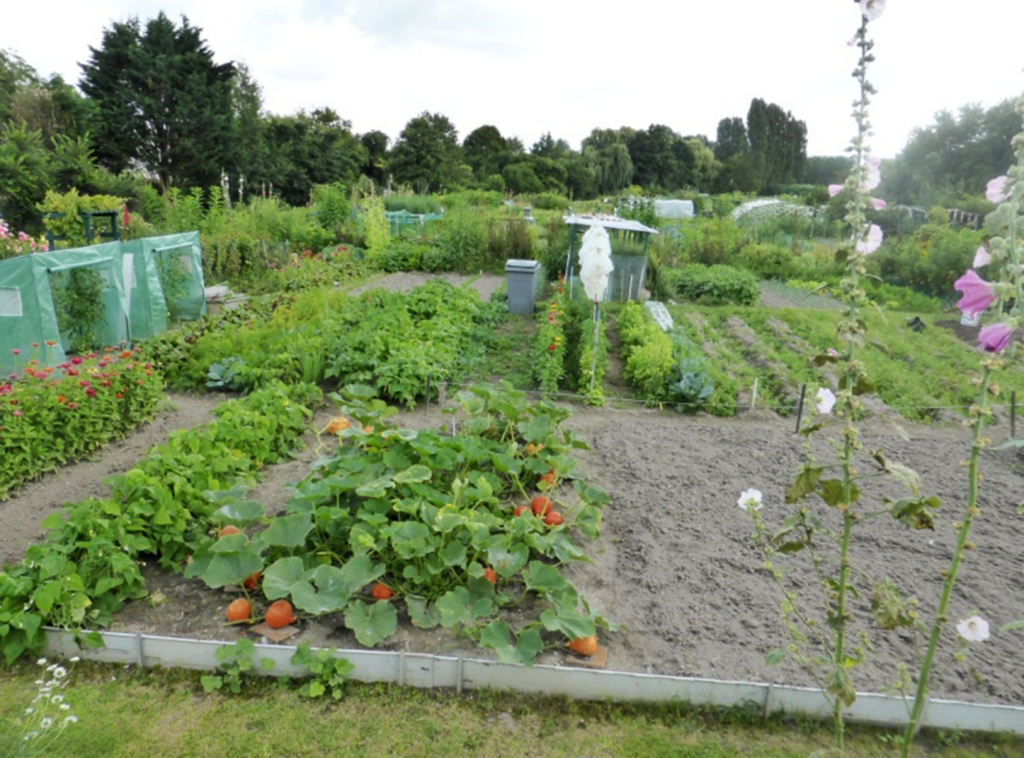
Urban and peri-urban agriculture (UPA) refers to the cultivation of crops and raising of livestock in and around cities. Urban agriculture typically involves small-scale activities, such as gardening in vacant lots or on balconies, aimed at personal consumption or local markets (Figure 1). Peri-urban farming, located on the outskirts of cities, often operates on a larger scale as semi- or fully commercial enterprises producing vegetables, dairy, and poultry for urban populations.
As urbanization accelerates—currently, 56% of the global population lives in cities, a figure expected to rise to nearly 70% by 2050—UPA is becoming increasingly significant. It offers fresh, perishable produce to urban markets, reduces food transportation costs, generates employment, and contributes to sustainability through recycling waste and mitigating climate change impacts. Moreover, UPA helps to green urban areas and fosters circular economy practices.
Challenges and Planning Objectives for UPA
Despite its benefits, UPA faces significant challenges. Urban sprawl and rising residential land prices contribute to the fragmentation and scarcity of agricultural land, while conflicts between statutory and customary land use rights create uncertainty, particularly for vulnerable populations like poor and female farmers. Many urban farmers also lack business and market skills, which often results in low productivity, oversaturated markets, and excessive competition. Additionally, water scarcity and the use of untreated sewage for irrigation pose health risks, while the presence of livestock in densely populated areas contributes to soil pollution, odors, and potential disease outbreaks.
Given these challenges, priority planning objectives for UPA include:
• Managing urban sprawl to control rising land prices and protect agricultural land from fragmentation and scarcity.
• Resolving land ownership conflicts to provide clarity and prevent disputes over land use rights.
• Developing the business and market skills of poor urban farmers to improve productivity, avoid market saturation, and enhance economic viability.
• Addressing health risks and preventing soil pollution caused by sewage water use and livestock activities near populated areas.
The Path Forward
Urban planners and policymakers often undervalue UPA’s role, limiting its access to urban land and supportive infrastructure. Yet, there is a growing recognition that UPA can enhance food security, combat poverty, and promote greener, more sustainable cities. To achieve this, UPA must be integrated into comprehensive urban land-use planning that balances expanding urban needs with the protection of agricultural resources.
With well-defined policies, effective governance, and collaboration across multiple sectors, UPA can be a cornerstone of resilient urban food systems, contributing to sustainable urban development and improved livelihoods.
A case study: the Malkerns Agricultural Town Planning Scheme
The Malkerns Agriculture Town Planning Scheme is an urban planning framework designed to integrate agricultural development within a peri-urban setting in Malkerns, Eswatini (formerly Swaziland). Launched with support from the Food and Agriculture Organization (FAO), it is the first initiative of its kind in the country. Its primary goal was to establish a policy framework and legal instrument to manage agriculture in urban contexts, particularly in Malkerns, a town known for its vibrant agricultural activities.
Interestingly, Malkerns is not a typical urban area. The average population density is about 100 persons per square kilometer, a figure more characteristic of rural regions in Western Europe. Only about 6% of its area (designated as Zone A in Figure 2) exhibits the above-average population density and infrastructure typically associated with urban environments.
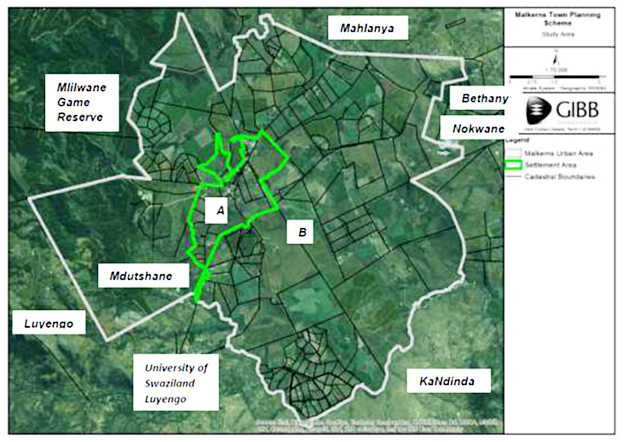
Instead, Malkerns is classified as a “declared” urban area, defined as urban in a legal sense rather than by physical characteristics such as urban land use, infrastructure, or high population density. This fundamentally agricultural character was the driving force behind a long-term development strategy that prioritized agriculture as the town’s primary economic base. This strategy required a dual focus: addressing the needs of a typical urban environment (Zone A) while preserving and enhancing the agricultural potential of the surrounding areas (Zone B).
To achieve this, the Structure Plan 2015–2035 was developed with two key components:
1. The Malkerns Urban Development Plan for Zone A, addressing urban growth and infrastructure.
2. The Malkerns Agricultural Development Plan for Zone B, focusing on agricultural sustainability and development.
Each plan was tailored to its respective zone, with defined geographic locations, zonal development codes, and specific development standards.
For more details on this case study, refer to the Validation Workshop presentation.